ABOUT       ARCHIVE          RSS       MOBILE       SUBMIT   
Loading

Showing posts with label space. Show all posts

8/24/2011

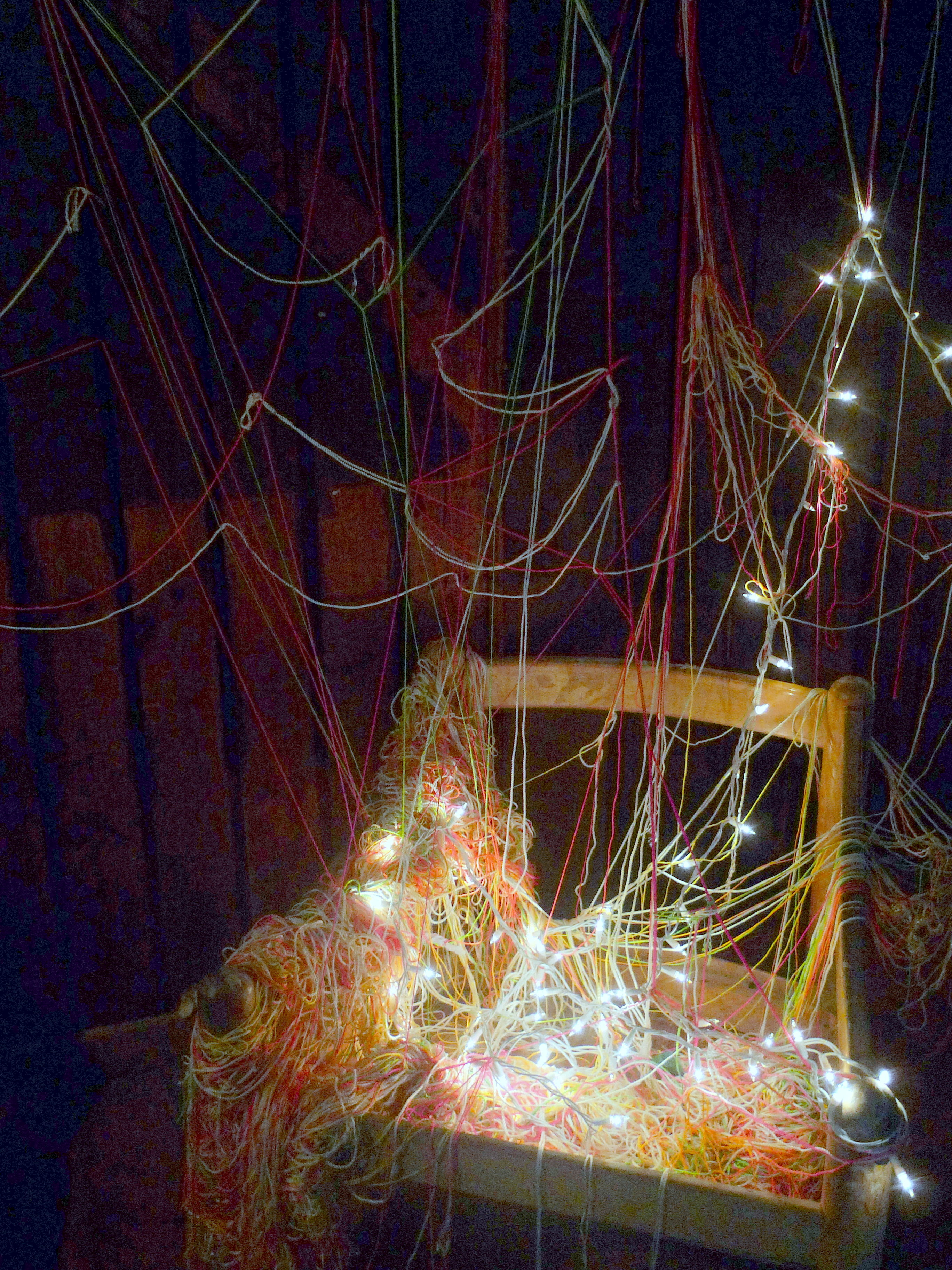
Strings at Chair


2011
chair, string, xmas lights
installation


8/16/2011

First thing in the morning, I shave


Let me start with this: a blind vulture
on the deadest of trees, a line of ants,
a baby rabbit like a wad of tissue
paper, a thin layer of flesh and the sky
underneath it all. Talking is a clump
of red dirt in a severed hand. Wait.

Let me steal this picture: my days
are orchid petals floating down
a river and at night, only the sound
of conspiring. This does not
belong to me. No matter. Cut the trees
close to the earth. Dam the river.

Close the earth, dam the rivers,
belong to me. No matter, cut the trees
of conspiring. This is not
a river at night, only the sound
of orchid petals floating down.
Let me steal this picture: my days

are red dirt in a severed hand. Wait.
Underneath it all, talking is a clump
of paper, a thin layer of flesh and sky,
a baby rabbit like a wad of tissue,
on the deadest of trees, a line of ants.
Let me start with this: a blind vulture.


6/21/2011

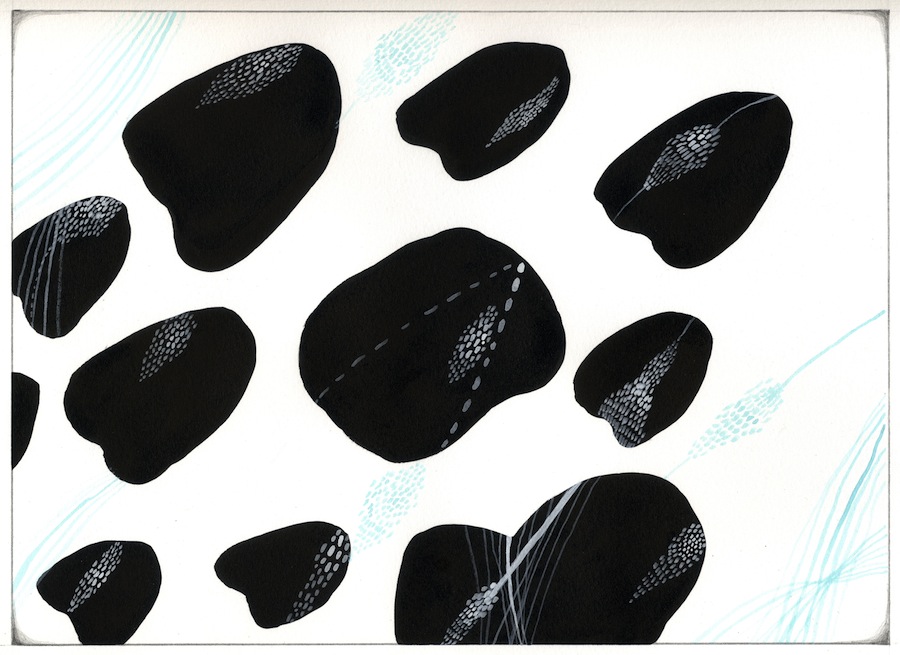
Stone


2011
Sumi-e ink, India ink, gouache, watercolor
and pencil on hot press watercolor paper
9 x 12 1/2 inches


6/08/2011

Soul Power


2009
gouache, polymer resin
18 x 24 inches


5/31/2011

Paris Notebook


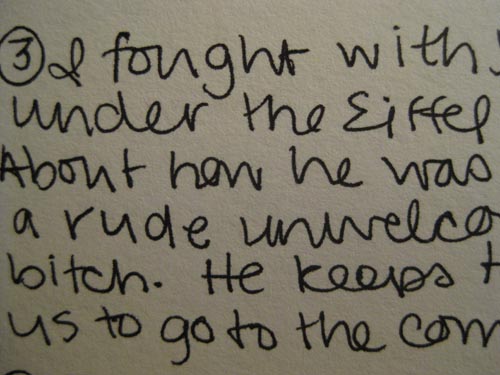
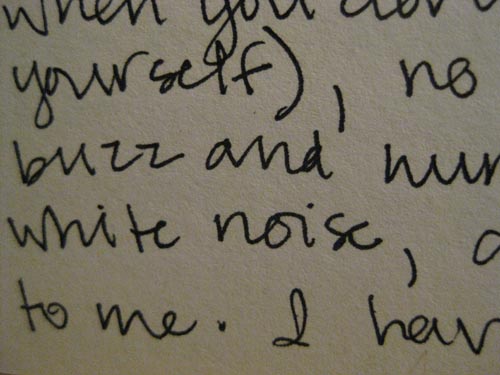
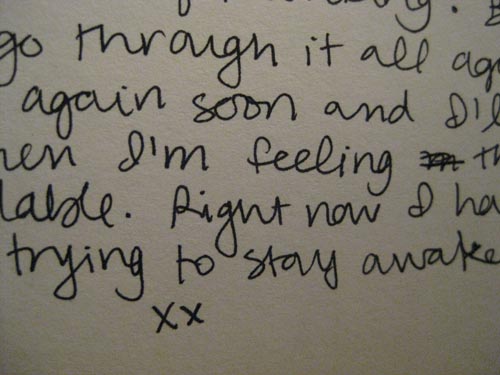
In 2006, my best friend Sarah Lynn Knowles and I decided to go to France over Thanksgiving to visit a friend of mine. He offered to host us for free in his small flat within the Montmartre neighborhood in Paris, and it seemed like the perfect escape from New York City, our asshole ex-boyfriends, and our usual family holidays. But as we learned through this experience, there isn’t such a thing as the perfect escape.

First of all, it poured rain the whole week. The first night we got overly tipsy on jet lag and wine and quickly found out our host was not as welcoming as he'd previously seemed (without added detail, a huge understatement). It felt wrong to be in Paris and feel miserable, but it was happening. I felt grateful for the opportunity to roam the historic city, but beneath the clouds, drenching rain, and thick air of resentment I still felt trapped.

All three of us were fighting and felt like shit. For a week, I lived off white wine and cigarettes. I remember trying to stay as positive as I could, and then privately calling my Dad from a payphone to cry like a child. I worked hard to simply soak in the details of what I was going through, knowing that no matter what, this experience would shape me for the better somehow.

The following photographs are from a journal Sarah kept during the trip. Our feelings regarding the same experience aren't identical, of course, but these snapshots of her hand-written journal portray a personalized, artistic expression of our shared experience. These snippets brought forth a lot of memories of moments, and I am grateful she shared the trip and these photographs with me.


5/24/2011

The Coast


Download - The Coast


2011
digital image
640 x 427 pixels


4/28/2011

Dolphins Into The Future Interview

On his site, Cetacean Nation Communications, Lieven Martens writes, "My music is a landscape. A ku'ono for your mind to hike in. For the exploration of a personal jungle. For the atonement of a world out there, above there, in there. A spring of harmonies. A bay of sound. A natural and abstract composition, rooted in romance and subconsciousness." Martens is a Belgian artist, based in Antwerp, who recently toured in the US with Monopoly Child Star Searches and Floris Vanhoof. Before his performance at Sarah Lawrence College on April 11th, we talked about his inspiration, process, sonic sources, and plans for… the future. Below is a picture of us ("You should be in it too - the interviewer is just as important," he said) and below that is our conversation.

LL: Can you talk about your musical history; how long you've been with this project and projects you've done before that? LM: I've been doing this since 2006 I think. Or 2007. That's under the name Dolphins Into the Future. But I've done similar stuff, but more deep manipulation, for I don't know, a bunch of years. LL: More deep? LM: Not more deep, but more… rusty. It was more just pure music. Dolphins into the Future is supposedly more centered through specific ideas and theories. It's not just music. It's more like a complete thing. The earlier stuff I did was just music; music of life. LL: And your more recent stuff is informed by philosophy? LM: Yeah. Theosophy. It's a movement that started in the mid-1800s. They do thesis of all the spiritual information in the world. She's called Blavatsky and she wrote a book called The Secret Doctrine. It's about, actually, just the past future and present of mankind. Mankind both in a physical way - like, we were born - but also in a ritual way. They use old pre-religious doctrine style writing. Pre-Christianity. LL: As it relates to your music process, how do you bring in those writings? LM: When I do an album - like I did an album called Music of Belief. Because I'm interested in how religious music is being created. You know, Buddhist music or even Christian music. For half a year I only read devotional texts. To see how that affects my brain, and what I make. And so that album sounds quite different from all my other stuff. But I have other albums. I made an album called Ke Ala Ke Kua. That's about the Kealakekua Bay in Hawaii, and all the things surrounding there. So it's not purely philosophical. It's one of the inspirations. LL: What was it about that place that drew you to make an album about it? LM: It's a heavy power stop for the Cetacean Nation. It just attracts a lot of activity around it. People who want to establish communication between man and dolphin. It's also just a place that looks like artwork from Caspar David Friedrich, the German painter. Just the colors and stuff and how it's all caved. I've been there. I did field recordings and camped there with a bunch of friends. LL: Do you use your field recordings as your samples in your music? LM: Yeah. LL: Are all of your samples things that you've recorded? LM: Mostly. Not all. But I started using them because I was interested in the musicality of - like when you record birds singing, instead of a surround-image it's a 2-D image. An aural image. And then if you listen to it, as a kind of music, there's a different, non-human, mathematic part to it. It's like classical musical done by an alien presence. A non-human presence. LL: There's something mathematic to it? LM: When you're a person and you write music it's mathematically like - you have octaves, or if you play certain notes and divide it, then it's another note… but birds their sound is a non-human mathematical sound. And it's just like listening to ocean waves, or birds, that affect me and how I start playing music. I try to create music that sounds more like it's coming from a non-human entity or whatever. LL: Do you always start with some sort of sample from the natural world? LM: A lot of times. Not necessarily always, but a lot of the time. I try to not overdo it, because when I look back through the last three years I've done music, it's been basically all filled with nature samples. I'm going to try to cut down a little bit on that. I mean, I don't want my music to sound like a formula or something. "Oh yeah it's that guy, with his ocean waves and eerie melody." I just think it's inspiring. LL: So that's one of your aims for your next album is to move away from… LM: I don't know. I'll just see what happens. It could be. But now I'm gonna go live in Portugal on these islands called The Azores and I'm going to record an album there. So I'm afraid it will be the same thing again, because it's surrounded by ocean and wildlife. LL: Well it won't be the same thing… LM: No, probably not. But definitely the latest compositions I made are purely only instruments. Not like the live show, because you will hear it's filled with that whole sound. Exaggeratedly. LL: Your live show always is? LM: No. For a while I didn't do it but now I'm more into it because a lot of times my live shows are disconnected from my LPs. So in this show I try to create almost the exact environment that I do on my records. Which is filled with animal sounds and water. LL: Who is releasing your next record? LM: There's a record with installation music I've made for the art of Ada Van Hoorebeke coming out with Aguirre in May. Beyond that I'm not sure. I have to be in the right mindset. Sometimes, for half a year I cannot make music. When you don't have ideas you cannot do it. Or at least have the strength to combine and finalize ideas. To listen to a Dolphins Into The Future live set click here.

4/21/2011

Bingo


His fishing rod had been broken for months. He squatted, scribbling at the boards of his dock with a carpenter’s pencil. He had renamed himself Bingo Cartwheel when he was fifteen and didn’t tell anyone. He was thirty five now. Fishing was the only way Bingo could make sense of things. Writing about it was like lure fishing (spinners, jigs, cranks, plugs, spoons, buzzbaits, poppers)—which never worked for him—casting something made up out and hoping it came back with something real attached to it.

His limbs were long and didn’t look like they had been made for squatting like he was. His boots looked like a pair of anvils that had been welded to his spoke legs. His belt wasn’t holding up his pants despite the knot he’d tied it in after the buckle broke. He was going back over the letters with the pencil until the ruts of each letter shone with graphite.

In the shallows a little ways up the small river something was coming up to the surface. It was an oval the color of the moon but smooth like an egg. As it came ashore a bellybutton emerged, followed by limbs and a nose. He put down his pencil and walked over, boots sinking a few inches in the mud and making a sucking noise as he picked them up again.

He stood over a floating brown haired boy. Bingo looked at the face in the water. It looked like what happened to the boy hadn’t been so bad—his face didn’t make him look broken, just shut—like a closed book.

When Bingo still had the patience for books, he had read that there were deep sea vents—cracks in the ocean floor where heat and black poison gas from inside the earth escaped from twisted mineral chimneys. These vents were covered in plants and animals that had never seen the sun, and didn’t need it. They thrived on blistering hot, toxic smoke. He liked that, oddly colored, uncouth forms of life at the bottom of everything sucking up exhaust from the earth’s smoldering core. Creatures that would die if brought into the light.

The boy’s lips were purple and his skin looked like fresh, wet mozzarella with blue veins tangled in it. His expression made it look almost natural, as though this was just how he always looked. Bingo pretended that this was a special kind of boy who lived in the river and herded catfish. He pictured the boy standing in the river’s murk, watching catfish sift through the mud, or pulling them to a new pasture by their whiskers.

Bingo’s gaze wandered from the boy and past the shoreline trees and brush on up to the sky, all closed over with clouds the color of dirty snow. Though it wasn’t bright, the upward tilt of his head sent his eyelids closer together, like they were trying to whistle or play a trumpet. After a series of half thoughts that culminated in a slow wind he could feel blowing cold across his eyeballs, Bingo bent down and put his hands on the body’s shoulders and slipped the young shepherd back into the brown river.


4/07/2011

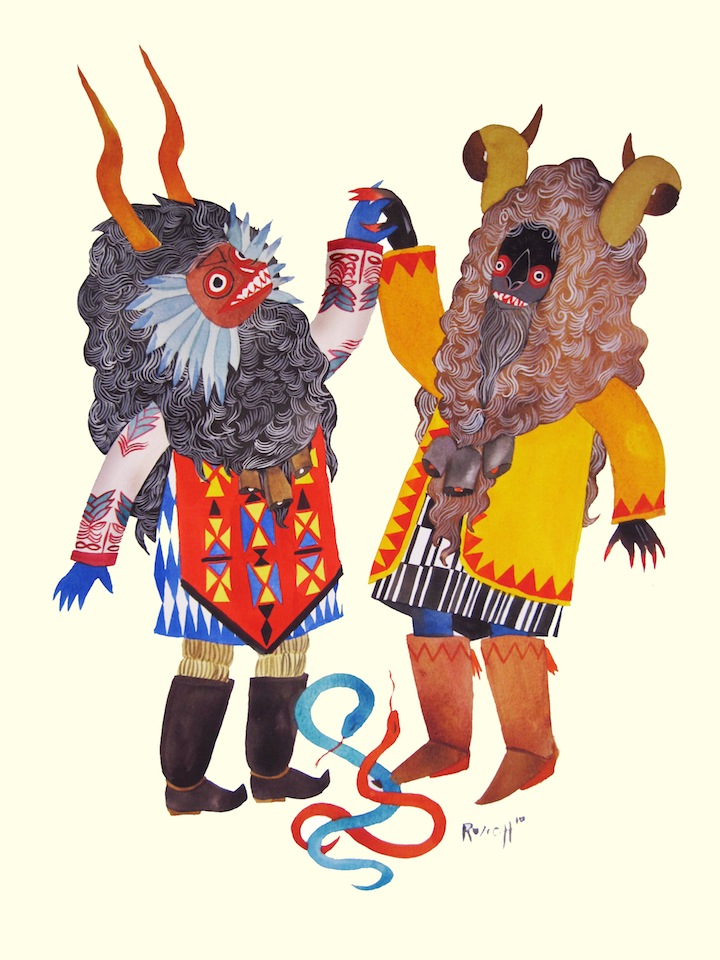
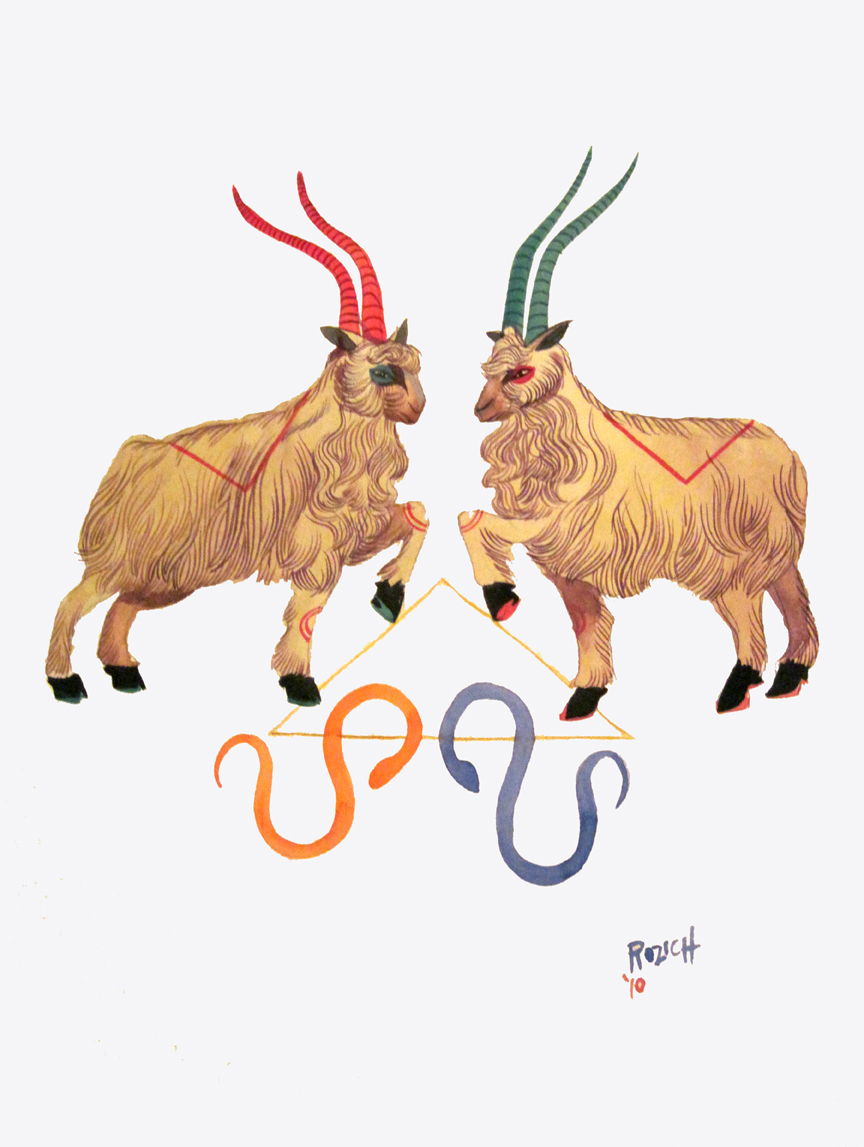
Snake Dance and Mountain Goats


Snake Dance
2010
watercolor, gouache, acrylic ink
15 x 21 inches


Mountain Goats
2010
watercolor, gouache, acrylic ink
15 x 21 inches


3/10/2011

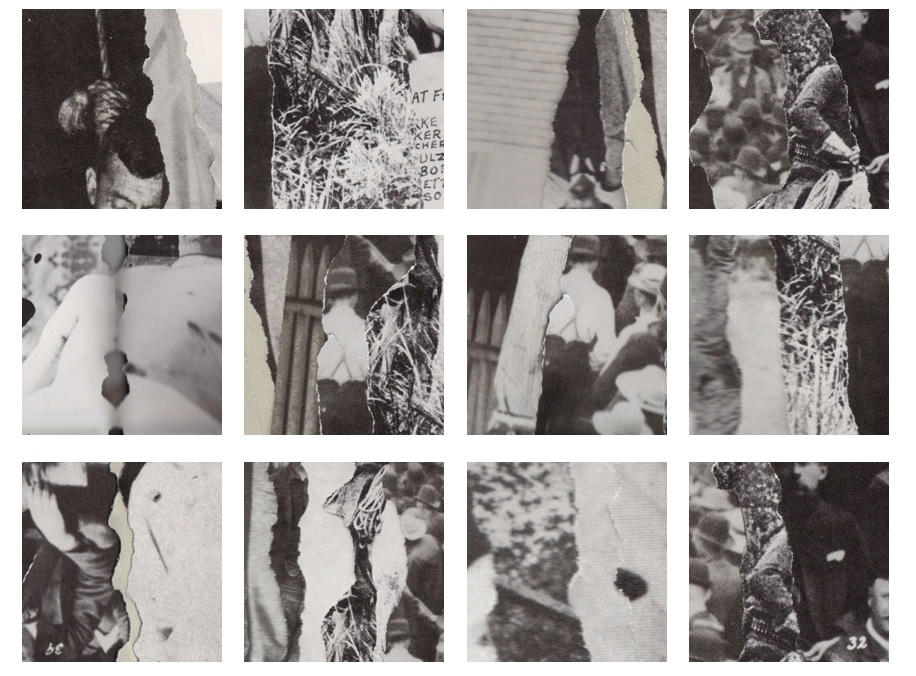
Interstice


2010
paper collage 
12 4 X 4 inch pieces


3/01/2011

Watching The Girls Go By

At the Virginia Beach waterfront along the boardwalk, there is an old, wood bench facing the Atlantic Ocean. Mounted on the center of the backrest is a gold plaque with a dedication and inscription bearing the words “Watching the girls go by.”


I question:
the smooth pine,
a rigor mortis of armrests and backrests,
the ribcage beams forming the seat and legs
bolted into concrete,
watching.

In the neon sundown,
the rings of years and knots in the wood,
the cigarette burns and knife-carved initials,
the worn-down hearts in-between,
ingrained, shallow by wind and sand,
left by watchers and hand-holders,
the smolderers of youth sat
on a seat of rigid pine.

I question:
if sitting
on the worn surface of a wooden bench,
torn skin fused into scars on elbows and kneecaps,
the burns on the sides of palms,
the blemish of acne scars worn down by the sun,
the tattoo needle to the ribcage,
if I’ll have sat there,
beachfront,
anywhere,
watching the girls go by—
watching, in stillness,
sitting, in sea salt,
aging, pocket-knifed, impermanent, a
biding of
time,

I question:
if there’s any difference
between that and death—
if the sitter and the seat
become one on the boardwalk
under the neon night
that makes it so hard
to distinguish
the lurid outlines
of with’ring flesh, bolted pine,
when all the girls stop going by
and the waves pull driftwood out to sea.


2/17/2011

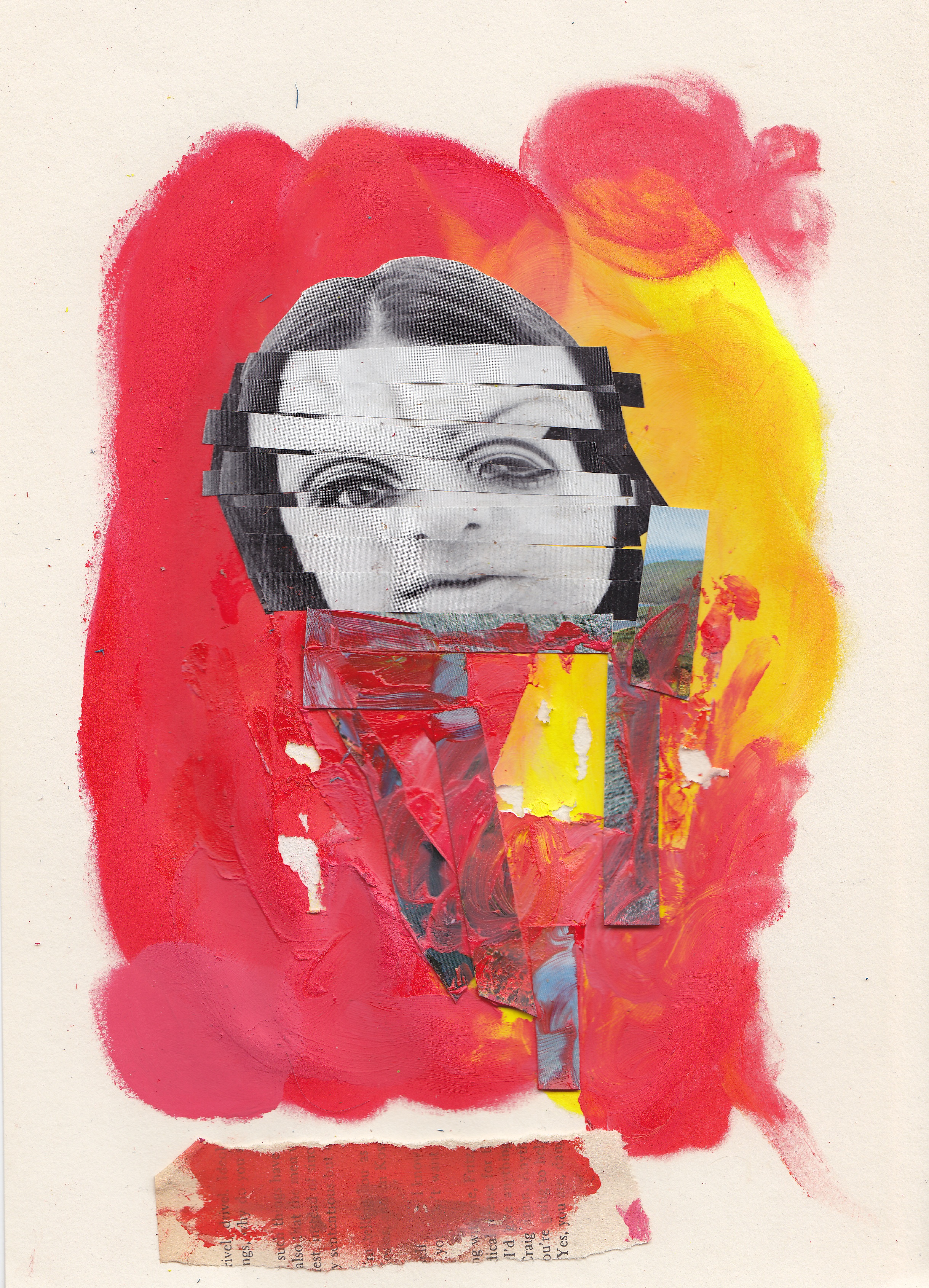
No Nerves


collage with paper and paint


2/08/2011

Red Horse


click to enlarge

2010
watercolor, gouache, acrylic ink
15 x 21 inches


2/01/2011

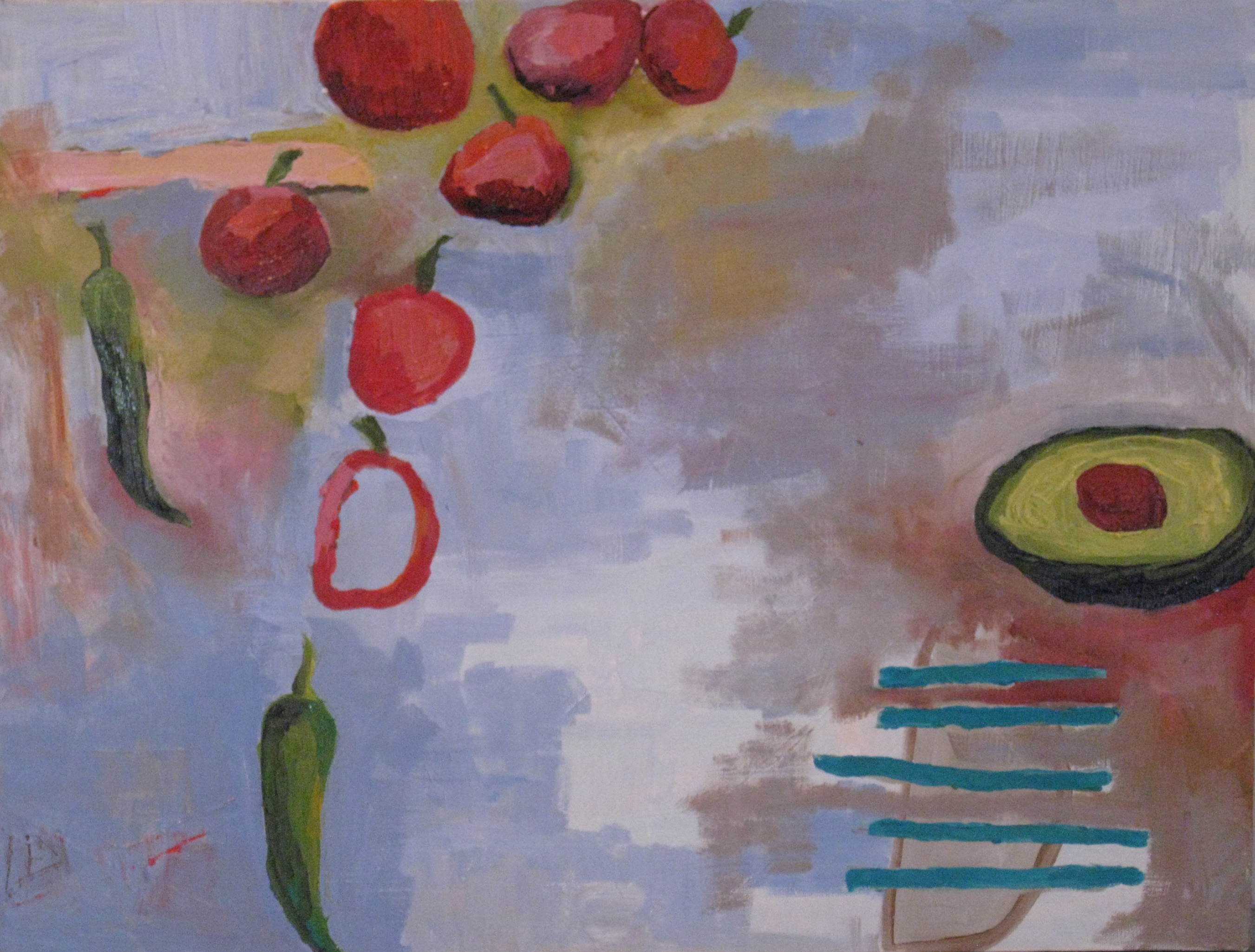
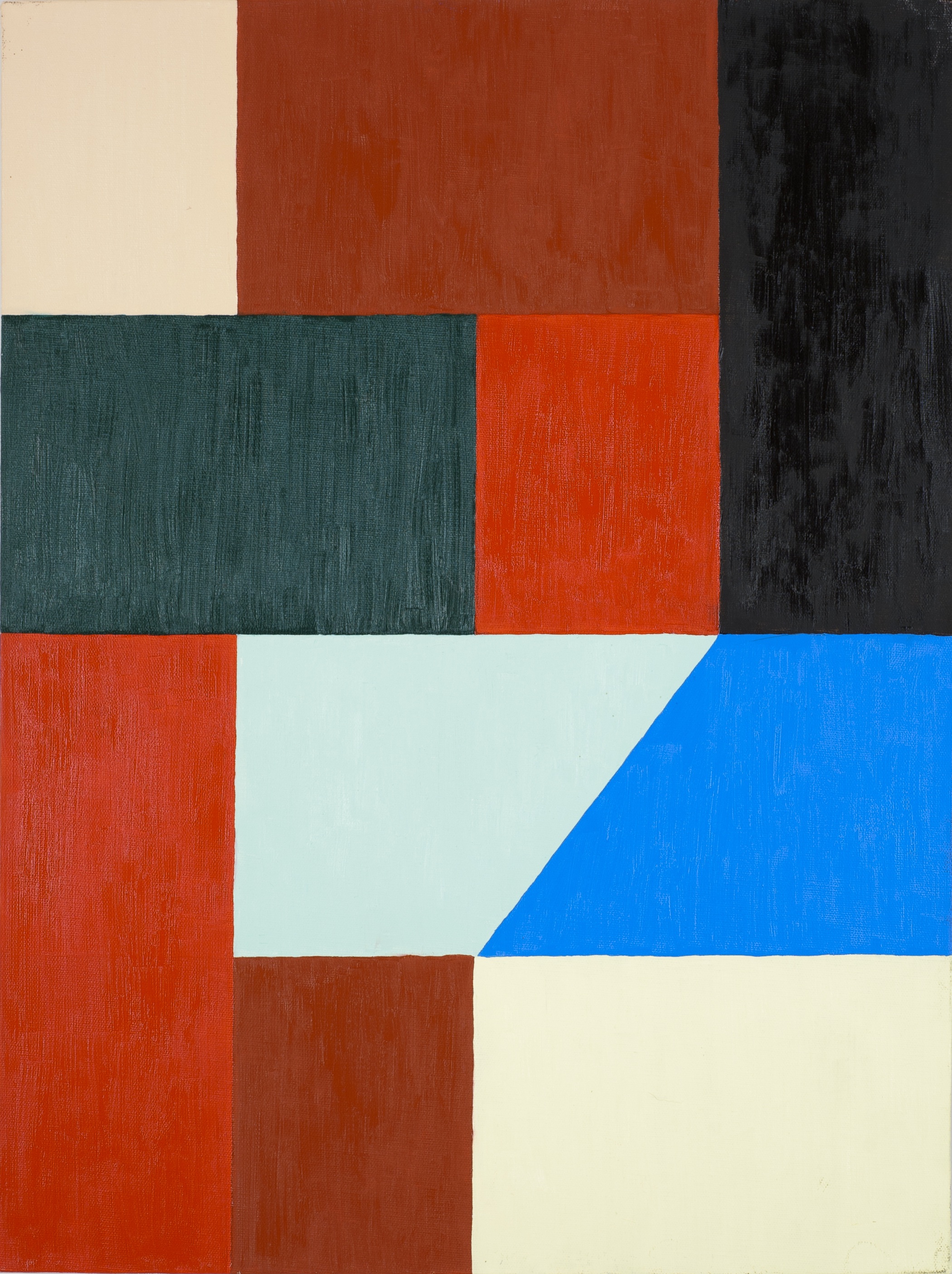
Untitled


click to enlarge

2010
oil
30 x 24 inches


1/25/2011

Untitled


click to enlarge

2010
oil on canvas
24 x 18 inches


1/05/2011

HEAVY CLEANER


collage with paper and paint


12/21/2010

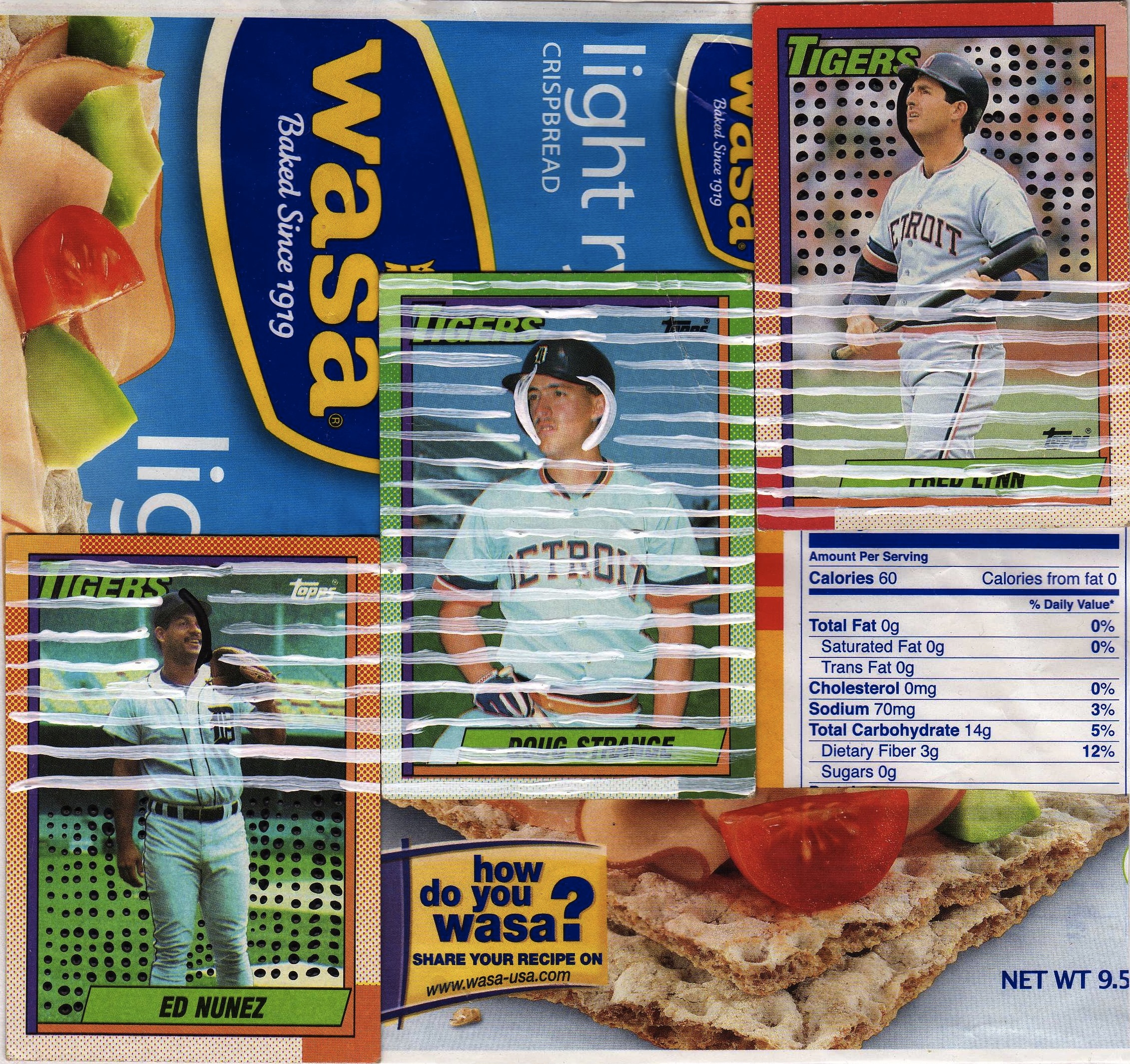
Chrisp Breatt


2010
Mixed medium collage (wasa crisp bread wrapper, 
scotch tape, 1990 topps baseball cards, acryllic)
8 x 8.5 inches


12/01/2010

Notes From the B Train: Part 4


View: Part 1, Part 2, Part 3

XI.
I spend the spring working with a new gentleman, Vanya, who appears to be about fifteen but is actually my age. The fact that he has no years on me does not stop him from dispensing all kinds of advice. “Listen,” he starts one day, apropos of nothing in particular. “All I’m saying is that a person’s education is never over – and I’m not talking about school.” And with all the wisdom garnered in his twenty-two lengthy years: “Every problem in life can be solved with math except for women.” I can’t really fathom what he means by this, and math is not exactly my strong suit, but I nod in agreement. Upon finding out I am newly single, he decides to share his courtship experience with me. “I finished my rapid dating phase early,” he lectures. “By nineteen I was just ready to settle down.” Vanya spends a lot of his day acquiring and consuming beverages, among them Mighty Leaf tea, peppermint mochas and the occasional glass of microwaved plum wine; at night, he reminds me, he prefers cognac with the occasional glass of Jack Daniels. “Jack and Coke – that’s the family drink,” he tells me proudly, like this family of Ukrainian émigrés that I have come to know through his screaming phone conversations with his mother thrice daily actually invented it.

Vanya introduces music to our office, which is initially an improvement upon the hums of our servers and the habitually shrieking cashiers. Unfortunately, Vanya has a European’s taste in American music. There is a lot of techno - the booming kind that makes you feel like you’re in a cavernous club where the lights flash epileptically. For some time after that, we spend our days tuned to an Internet radio station called Chill FM. Just happy to be listening to something with words, I express my enjoyment of an Air song. “Just wait,” he says excitedly, inviting me to turn and face his monitor. While I watch over my shoulder, he logs into his Deviant Art account to show me a photograph he took inspired by the song “Playground Love.” It actually depicts a playground, the one just across the street by Restaurant Tatiana. But compositionally I am surprised to find I like it a lot.

Over the course of our months together, several things happen to Vanya. The first is that he falls in love around the same time I fall out of it. “Girl,” he tells his beloved Sasha over the phone, “You want me to bring a bottle of champagne tonight? Tell you what: I’ll bring two.” I type out an email to a friend with more force than is truly necessary: “Fuck love and everybody in it.” Then it turns warm and I fall into a relationship just as Vanya falls out of his. “All these Brighton girls,” he complains, “They just wanna get married.” I have headphones on listening to “Hold Yuh;” I am feeling positive for the first time in a while. In April, Vanya goes to Coachella and returns having discovered marijuana and Burning Man. He seriously considers the idea of growing dreadlocks. This combination of revelations puts him in touch with his long-touted but somewhat latent musical side and he starts seeking my help in writing song lyrics. “Lusya,” he inquires. “What rhymes with ‘inspiration?’” Having concluded that my marketable skill is not so much Russian as it is English, he begins consulting me as his personal spell-check. “How do you spell ‘lingerie’?” he asks. “And ‘stewardess?’ I need this for a really important Facebook post.”

XII.
There are a lot of things I find to be vaguely morally challenging about this job. Aside from translating copy for revisionist pro-Stalin histories – what would my anarchist Russian ancestors think? – I translate promotional articles stating that all girls are born wanting to be moms and wives someday, swallow hard during the racist and sexist jokes, yell at angry babushkas on the telephone and take part in a lexicon of phrases like, “I am watching you” and, “You will be held responsible for your mistakes.” (Everyone seems to have learned their English by watching The Godfather or playing World of Warcraft.) There are days when I think I should get paid twice as much for working in two languages, and other days when I appreciate that I am perhaps only truly required to be half-good at either one.

In June, when I decide it is time to move on, to leave New York and translating behind for a while, I learn that Russians have certain traits that are terribly hard to walk away from: their tradition of buying food for everyone else on one’s own birthday, occasional champagne afternoons, and heated discussions of UFOs and Greek myths. Mostly, though, it is their total laxness hiding behind a veneer of dictatorship; their genuine concern and crazy commitment - even for a girl who wears thrift store sweatshirts - concealed by the stern looks or the constant yelling and shoes so pointy they’d pierce your shins.

It takes two full months to quit my job. I start large by announcing I am moving to Asia. “What are you going to do?” my boss asks me quizzically when I inform him of this. “Learn Chinese?” As if this is actually an insane thing to do, as if he doesn’t read the news, as if learning Russian makes more sense than learning a language spoken by a sixth of the world. Soon he dismisses the idea entirely. “So you’re going to Israel,” he informs me with a bemused grin, because, to him, this is the only country that allows Jews. “And when will you come back?” I tell him I’m gone for good. He smiles merrily and gives me a look of the kind people give during the early stages of relationships, when they’re skirting genuine feeling. “We’ll see,” the look said.

One day in the beginning of July, when I give my final month’s notice, I type this on my phone on the train home: “When I lived in Russia I appreciated most my lack of responsibility for anything except, essentially, staying alive. Even failing classes seemed like it might not have the consequences it would in the States. All my relationships were far away, fourteen hours away, and while this was hard at times, it was also incredibly easy. When I go to work every day, I am distancing myself from all the things that are familiar to me. It has become its own alternate reality, my little Working Vacation on the Beach. I won’t miss the unpredictability of the office clamp-downs, or finding myself locked out of my office because some men need to catch a mouse with their bare hands – “Lusya, step back, there will be blood,” they say, totally serious. But I’ll never work somewhere like this again – at least on many days I hope I never do.”

New York is unbearable, like it is every summer, and my usually peaceful commute gets rowdy as the B train fills up with high school kids on their way to the beach. I tell myself I can’t wait to get out of here. But as the end date approaches, I find myself on a tipsy humid night telling a boy I wish someone could say “Lusya” the way the Russians do. He tries valiantly but I shake my head; it’s in that softest of spaces between the “s” and “ya.” I wake up some weekend mornings with Vanya’s favorite Pink Floyd song in my head, thinking of the way we both confidently sing along to the line, “Hanging on in quiet desperation is the English way,” as though we have any knowledge of English ways at all. I start asking with genuine interest how his artistic endeavors are going, concede that this one abstract photo does, in fact, look a little like Kandinsky if you squint your eyes just right. My boss announces abruptly one day during my second to last week that I am “the best,” and I consider that boyfriends saying it never sounds as good as when he does, his “the” sounding more like “they” and the intonation of the second word rising out of his mouth like smoke. I try to imagine a life where Misha doesn’t sit down next to me at 2 PM every day to eat a banana. If not Marya, who will sneak up from behind and scare me? Who could come up with more diminutive variations for my two-syllable name than Natasha? Probably not the Chinese.

XIII.
I have by now collectively spent days of my life waiting for the B train: in lots of rain and some shine, among beach girls in rompers and aging Russian men in gold chains. I have gotten unreasonably indignant when asked for directions in Russian – this is New York! – but answered in Russian just the same without thinking. I have tried to listen for waves from the elevated platform and seen sunsets over Soviet-style high rises taken straight out of the exurbs of Vladivostok. I have sent text messages in Cyrillic by accident. I have quaked in my Keds dreading to ask for vacation in a language I didn’t feel I understood. I have smiled when I had to concede the Russians were so much more generous than I’d anticipated, in almost every way imaginable.

The trains in Brighton Beach swing toward you around a sharp bend. The B trains are the older kind with orange seats and graffiti and out-of-date ads, and their approach reminds me of the Cyclone roller coaster at Coney Island, just down the boardwalk from my office. There’s the sound of rickety wood and a whoosh of air and the moment when the angle allows you to see both the conductor in the front car and the tail end of the last one simultaneously. It’s not often that you see the start and end of trains, or anything else really, all at once. I remember my first day of work, the start of the period that one day months from now, I’ll call My Slow Descent Into Fluency. I don’t remember the last day, because it turns out it never happens: Two weeks after my last day in the office -- “Will you come back to us a ninja, Lusenka? A spy?” they ask over champagne toasts -- I get a call from Misha. I am back in my hometown for a while before leaving the States. I ignore his call, as I have always done with the Russians, and wait to listen to the message. “Lusya,” he says, not as sheepishly as I would like but still somehow sweet in his resigned tone. “We were wondering. Can you work for us from home?” And I say yes, because I always have said yes to the Russians eventually, because I am not ready, it seems, to say no, to say goodbye for real.


11/17/2010

Bechamel


The Jutland Peninsula has taken her in,
my cousin—            
like they sheltered Judens during the third reich reign.
She can marry there,
but not on holy terrain
                        because her mom’s not kosher/

She returns to celebrate Christmas on the kibbutz—not kosher,
where I pocketed rabbits—  not kosher—
and ate bacon for dinner with cream— not kosher—
or my aunt who fed it— 
my Dane dame—not kosher— who exclaimed
             “Your tush is flowering with jubilation!”
as I lay frogstyle— not kosher—
on the tile.


My cousins’ son, named Yonatan,
suckles her cheek and teat.
He puckers—  an ingathering of lip pleats  
a kibbutz of sorts—
            the family’s scatter and flock

kibbutz round pagan lights            
kibbutz for soldiers on leave
micro kibbutz on cells and skype
kibbutz on Shabbat
kibbutz parking lot


Yonatan was born off the kibbutz.
like me raised by a daughter of the/   away from the/
who’s parents live on the/
that is no longer    really              a/


My mom’s lips never converged on teats
but rather bottles of fresh cows milk
quickly scattering in refusal
            of fatty                         alien             goods.


I disaffect her-like
Fuck lite.
Gimme more filllin. More skin. more pepper grindin.
More chew.
More melt.
I’ll butter the skillet
loosen my belt
ladle and lip grip
taut sacrament
relinquish the bet
drop Hannukah gelt
affix  ‘il’ to Lent/
            and reminisce of schnitzel corn and rice—delight

Persons of every generation must view themselves as having been
individually freed from the land of Egypt


After the Pageant


the dining hall
                                                has dissembled dismembered

every generation individuated itself, to free(ify) itself

Egypt melts in a cast iron pan/

the fingers of my hand kibbutz to gesture            wait

as of late

soldiers kibbutz on Gaza.

while we—like milk and butter—


cream.


11/10/2010

Articles From Grandma