ABOUT       ARCHIVE          RSS       MOBILE       SUBMIT   
Loading

9/16/2010

Innuendo


soft palate craving

not souffle
or soft spells

softballs come near
sweaters may solace


/
sweater vest
turtle neck
mothball
hardball

spit
slant pitch


/
cross county parkway
Bronx river parkway
soft smelt playway
go local trainway
faster flit
expressway

sprain brook parkway
swallow circle/drive


9/08/2010

Went out for a pack of cigarettes and never came back


Greg Huffer went out for a pack of cigarettes and never came back. It was Jennifer’s 5th birthday. Party hats and birthday cake on the floor. The dog was on the floor. His son Jake, 7, on the floor. Goin’ out for a pack of cigarettes, Greg said. Jake held his arm in front of his sister as if protecting her from a sharp stop. Can I come?

Anne Huffer would not let her children cry after their father went out for a pack of cigarettes and never came back. Listen children, she said. Your mother has long legs and you have tongues in your mouths. The cake on the plate in her hand shook. Jennifer, clean the cake off the floor. Jake, run the faucet. Your mother has long legs. Your father is gone.

Jennifer Huffer began doing JC Penney ads a year after her father went out for a pack of cigarettes and never came back. Jenny on a bike. Jenny on a horse. JC Penney catalogues slip under every door in America, in every town she couldn’t spell where grown men hide. Jennifer Huffer married a Jehovah’s Witness: a religion with no birthdays. One night they went to a meeting hosted by a man who had gone out for a pack of cigarettes and had never come back. In the kitchen, men were going out for cigarettes and never coming back. In the bedroom, in the dining room, until Jennifer ran outside, in time to catch several men gunning their trucks, on their way out for cigarettes. Where’s my brother? She choked into the exhaust. Where’s my brother?

Jake Huffer had his mother’s legs. He made it onto the football team without trying out. He got bored walking around his town so at 17 he walked to another town. Then, he walked to another town. He hung on the edges of groups. No one lonelier than a good-looking man. He tried to be funny, tried a card trick. Looked up his father who was living with a woman with money. They didn’t let Jake stay; trucked away from him fast at the bus station, the woman’s blue coat sticking out of the cab’s door. Jake doesn’t know how long his father lived with that woman, or why the memory of her coat sticking out of the door comes to him now, watching his girlfriend slice through a party in a blue dress. It’s a blue she’s proud of. It’s a blue for him. Gifts repulse him. He’ll punish her for it later. He will give it to her under the awning, over and over, until she can’t look at the dress without feeling sick. I need a cigarette, he says when she reaches him. Baby, she says. You don’t smoke.

The night before Greg Huffer went out for a pack of cigarettes and never came back, the Huffer family had a party. Greg Huffer picked up a guest’s banjo. Greg Huffer who did not play the banjo played on the banjo an off kilter song and sang along in a dead way. Anne Huffer, smelling like mother perfume and dishsoap, knelt so she was the same height as her children. Look at your father, she said, her breath Christmas-quick. That funny man. The laughter on the tin strings and the jangling of guests. Look, she said, listen. Their mother kneeling behind them, Jennifer and Jake could hear but not see her as all three stared at the same man.


9/03/2010

Two Alleluias


The thefts had been small: last milk from the carton,
a moment, a glance, the buttons from my dress.

We sat where you gutted the fish, the house dark,
and our suitcase zippers glared back at the sun.

Passengers emptied onto the street the way doctrine
charges from the apse. A bus hissed, whimpered, and

lurched away. Your watch ticks out on the nightstand
until the little black beetles overcome the flour.

The gifts were also small: a bistro matchbox, a touch,
a shiver, a clover dried and pressed in the middle of a hymnal.

The cat would not stop licking her haunch. I, too,
sweltered in my fur.


8/24/2010

Letter in Retrospect


Dear Attractive Male Friend of My Mother's,

You were forty-three.  Me?  Thirteen going on thirty-five.  I loved the way you loved your wife and child, but let’s face it: you and me, we were meant for each other.  The way you’d sometimes wink at me from across the table at Mom’s dinner parties.  That time I came back from the orthodontist, and you told me not to worry, that I really pulled off the clear braces look.  You let me sit in the front seat sometimes even though I didn’t weigh enough to set off the airbags.  Remember us?  That’s when we were wild.  When nothing mattered.
 
All those times we high-fived, I knew what you were really thinking: how could I be so young, and yet possess such an old soul?  How could I see straight through your façade and deep into your heart?  How did I understand you in a way even your closest friends never could?  I couldn’t say for sure.  But if I had to guess, I’d say it was because we both really loved Seinfeld.

I liked your button-down shirts.  Your leather wallet.  Your grown-up accoutrements.  At my Bat Mitzvah, you told me I kicked ass.  Way to be subtle.  Thanks for the present, by the way.  That Tiffany’s bracelet with that dangling silver heart.  You may as well have just flat-out told me you couldn’t wait until I was legal. 
 
I forgive you.  I forgive you for bringing her to my piano recital.  For putting your arm around her as you told me you loved my interpretation of Jolly Old Saint Nicholas.  For ruffling my hair and robbing me of all my dignity.  I forgive you.
 
Hey. 
 
Remember that time we all went out for ice cream?  I let you try some of my rainbow sherbet with bubble gum chunks inside.  I had never shared a spoon with anyone before. I just thought you should know. 

X
Emma

8/18/2010

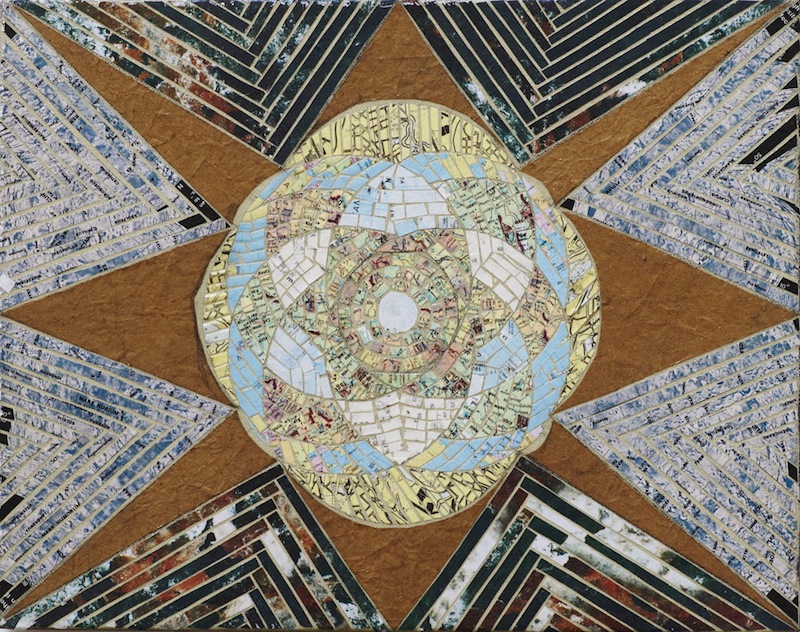
Tonight's the Night


2008
map collage, paint, paper on canvas
11 x 14 inches


8/10/2010

What we had on our hands


I said to my brother there’s a woman swimming in the saloose.
Where. He raised his hand against the bay’s light.
I pointed.
She was going in and out of the water. I lost her in the sun then she was back.
Stupid. He kept digging.
I watched for another moment then I kept digging, too.

Excuse me, a voice said. We looked up and both of us blinded.
She was naked except for unsexy underwear. She held her breasts in her hands.
My brother told me later I stepped behind him like the summer we saw a bat make epileptic circles above us. He stared. Even at 14, not a boy who looked away to save a
woman’s feelings.
They took my clothes. She used her head to point to the water. Boys, I think.
My mother and father out of the house. What is going on here?
They took my clothes.
My mother back into the house.
My father looked at a terracotta pot like he was thinking of planting.
My brother laughed. The woman said it’s not funny.
My mother came back with a sweater that had buttons shaped like barrels. The woman put it on. Her underwear was wet. Her eyes took longer than her neck to change positions.
Who can we call said my mother.
No family the woman said. My keys were in the clothes they took.
She buttoned the sweater wrong. She seemed more naked than before.
My mother said there must be someone.
The woman said there is no someone.
My mother’s hands worried the end of her shirt.
I said why were you swimming in the saloose?
She looked over the bulkhead where the water was blinking. It looked cool.
But the saloose is sewer water I said.
You have a nice family. Her breast was out.
My father stepped in front of me. Go home.
Getting dark and too far to walk.
That’s not our problem.
She was taller than him. Nice people would ask me to dinner.
My father to my mother: call the police. He held out his arms, anticipating quick
movement. Justine, in the house.
I said no.
We could hear my mother on the phone, explaining.
The woman sat on the dirt. I just wanted to swim and those assholes took my clothes. She stared at me. She was slow or injured.
My father’s fingers around my wrist pulled. I went into the house. I watched
from the window, fascinated and bored. I poured a glass of iced tea then the police were there. They pulled by her arms. She yowled. Her underwear came down when they
carried her. I heard her crying. I drank my iced tea.
The car pulled away.

My brother banged into the house. What we had on our hands was an es-cap-ee!
Escaped from where I said and he said he didn’t know.
That woman that day, she opened me.
Chicken and rice for dinner.


8/05/2010

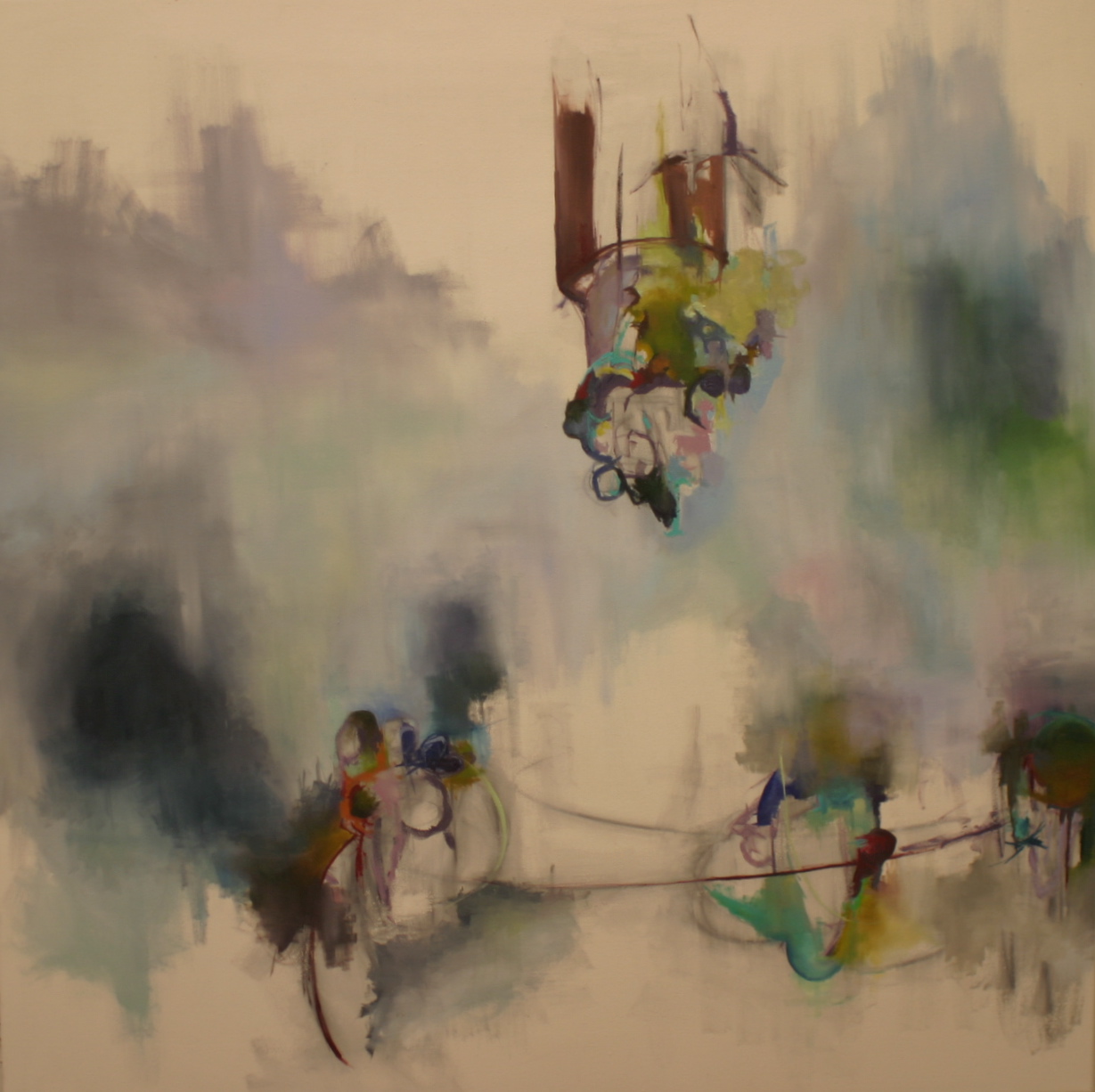
Untitled


2009
Oil
48 X 48 inches


7/29/2010

Half About Julie, All About Me


The longest and most frequent pause in my life, a year out of college, comes after being asked, “So, what do you do?” and right before I answer, “I wait tables.” Obviously, I do other things but the asker doesn’t mean, “How do you party?” The asker means, “What do you do to make a living? How do you financially support yourself?” The pause doesn’t come from my dislike of the job - I like it a lot - but from my inability to see beyond the title of waiter when I am forced to define myself. I pause because it takes a moment to deal.

Last week, while working a busy brunch, a girl, a cute one nonetheless, asked if this was my place. If she had not been with her hung-over boyfriend, I would have taken this for flirting. Still, I felt flattered, as if I had been mistaken for a celebrity, and not Topher Grace this time. Inarguably, being a restaurateur is far better than being a waiter. Besides the perks of more money and the ability to run shit, a restaurateur, like an artist or musician, receives a unique suffix that sets him or her apart from the rest of us laborers.

My boss, Julie, actually owns the French restaurant where I work. However special her label, it is still a label. Along with having this label pushed upon her, Julie is also forced to be the face of the restaurant. She is always there, and whenever people wave through the window, they are waving at Julie. Most restaurant owners cannot separate themselves from their restaurant. The egomania portrayed on these chef and kitchen reality shows is, unfortunately, pretty spot on. Julie lacks my pause-inducing anxiety not only because she has a more esteemed, title but also because she possesses a remarkable ability to separate herself, her identity, from her restaurant and whatever label she is forced to declare upon meeting someone new.

Even while at work, Julie doesn’t care about how her restaurant is perceived. Last Thursday, Glen, a bartender from down the block, came to eat before his shift. He asked if we had this whiskey or that rum. Could we make this cocktail or that specialty shot? He was showing off, pluming his peacock feathers, and Julie was having none of it. She only responded, “absolutely,” then poured him a glass of rose with a silent smile. The bartender’s posturing is pretty common on our block filled with bars and restaurants that, like us, have been around for about five years, some less. Because he was about to head to work, Glen was dressed like a greaser – his hair was slicked back and every article of clothing that could be cuffed, was. This is how the owner of that bar dresses and how he makes all of his employees dress. The bar is a scene straight from The Outsiders and very much imbrued with the owner’s identity.

Julie, though, she couldn’t give a fuck about what I wear.

This isn’t to say that Julie doesn’t love her restaurant, her bar or the bottles that fill it. We have a drink each night before we close and she stares at the many French liqueurs that line the shelves. I think I have caught her petting them. We taste the anis flavored Pastis. I think of how much I hate black liquorish but she thinks of her college where they would drink it without ice while “talking about Foucault and so much worse.” She cuts a slice of orange for the Lillet Blanc that I won’t be able to sell and tells me about the bull fights that happen in the south of France every August. I’m sure she could tell me similar stories about the stained wood tables or the curtains that she changes every season.

I take comfort in the fact that Julie is older than I am, and I hope that my pause will diminish with time. During slow shifts, with nothing to do, I imagine what Julie might have been like at my age. Every version is a total babe but one of them - my favorite – is like me because she also has trouble telling people who are future art dealers and politicians that she is a waiter. She has trouble, not because of their jobs and not even because of her job which she likes, but because she is afraid that this waiter that she proclaims to be, this self assigned classification, will get in her way of actually being herself which she will, in the end, become.


7/20/2010

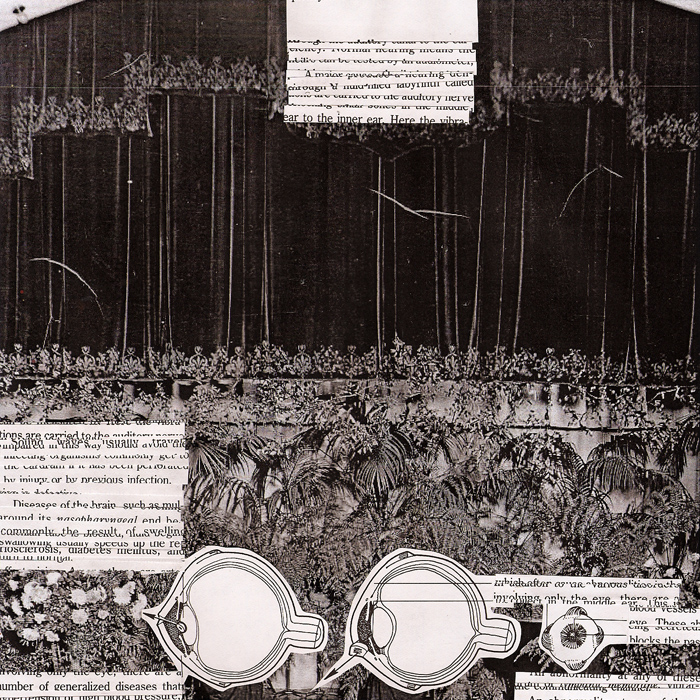
Who Have Eyes But Do Not See


click to enlarge

2010
paper
8 x 8 inches


7/15/2010

Mama


2008
Oil on Canvas
27 x 19 inches


7/13/2010

Cozy Space Mugz


Download - Cozy Space Mugz


chick-fil-angster
2009
film
408 x 567 pixels


7/02/2010

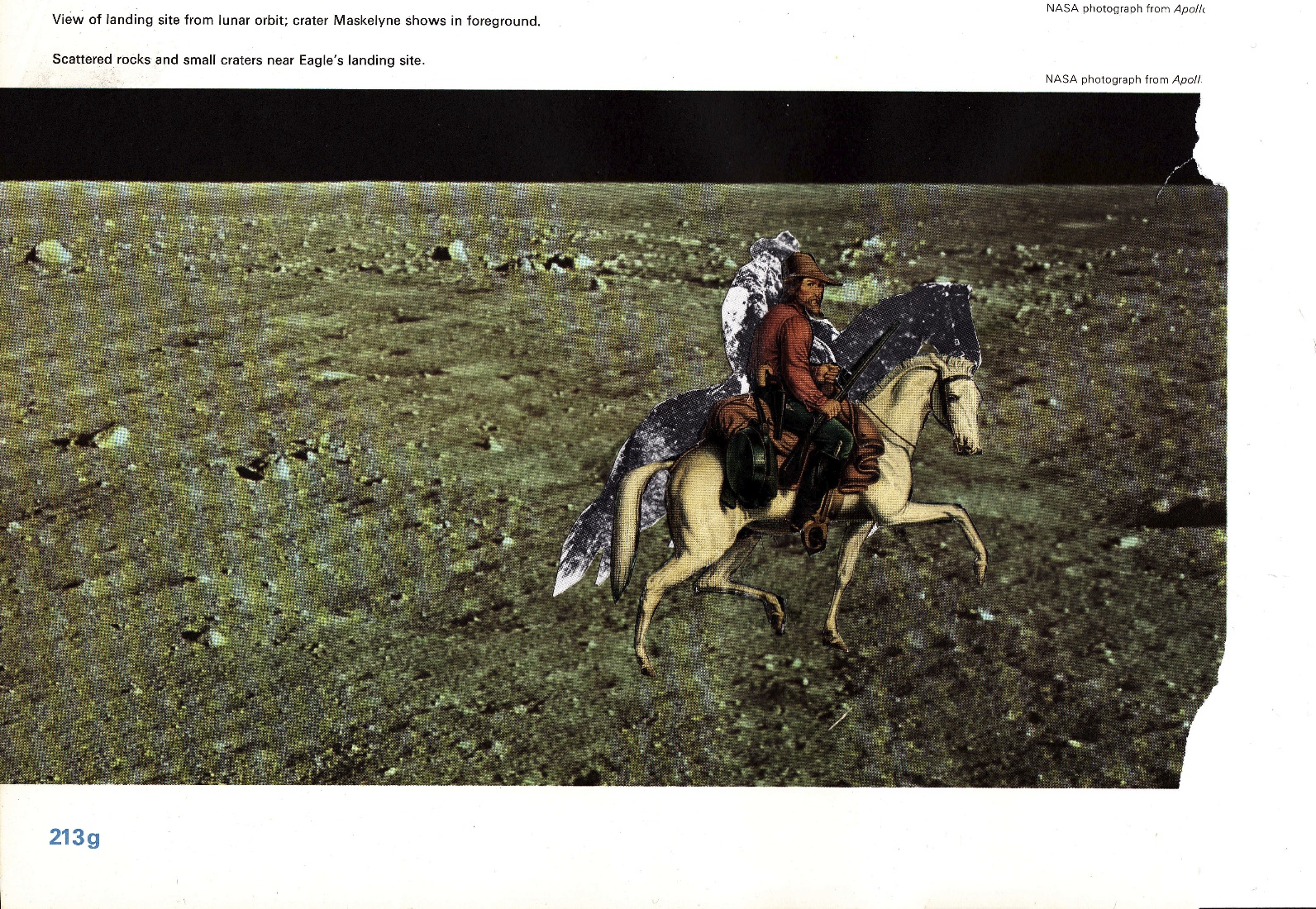
Space Cowboy


2010
collage
6 x 9 inches


6/25/2010

Big Bridge Diary: Part 4


Chen Si spends his weekends on Big Bridge which crosses China's Yangzte River, attempting to stop people from jumping. This translation of excerpts from his blog will appear on Low Log in four parts.

Read: Part 1, Part 2, Part 3

10-20-2008

4:50 p.m. I am patrolling the South Fort section of the Big Bridge, when I notice a woman. She looks several times over the edge of the bridge. I cross the street and come up beside her and try to get her to tell me what was wrong. She just cries. I advise and persuade many women who come to the bridge and they say not one word.

At 6:00 p.m. her cell phone rings and she answers. On the other line is the voice of a man who tells her that he wants her to stay [on earth] and live on. He arrived 15 minutes later and drove her away in his car. He told me that this situation [the attempted suicide] was all the result of a little misunderstanding.


08-17-2008

Tuesday morning: a man darted through the bridge’s traffic and — despite the pleas of onlookers - jumped into the Yangzi. Thursday morning: at the South Castle section, a young man plunged off the Big Bridge and died on the spot as he hit the concrete below. Friday morning: a young woman at the South Castle section jumped into the Yangzi, hit just by the water’s edge. She died on the spot.


06-22-2008

A middle aged man, standing right by an armed guard jumped off the bridge. His body was found in a flowerbed.


6/23/2010

Interview with Sam Herring: Part 2


I met Sam Herring, the front man of Future Islands, on April 4th before his show at Glasslands. We strolled around a corner and sat on a little ledge and talked for a little while. This is the second and final part of the interview.

View: Part 1

LL: Who was writing the songs?
SH: Gerrit and William worked out the songs, and then I would come in and write to them. It was never successful with me writing words first and then coming to those guys, because I don't know how to speak in music language. And that kind of goes back to my hip-hop roots of freestyle, feeling a song, feeling how it makes me feel and translating that emotion into words. And also just riffing off something. Because usually when we play songs live they aren't completely written yet. It's kind of fractured. I'll have a chorus, or a first verse and a chorus, and we'll just play it and see what comes out of my mouth. If there's melodies that work I might hold on to them.
LL: So a lot of it is improvisation?
SH: Well, definitely in the beginning process of writing songs it's a lot of improv and I don't wanna say jamming, but definitely jamming and feeling things out. I mean, Gerrit's the principal songwriter now. Because now that we don't have a drummer - for the last year and a half we haven't had a drummer – so Gerrit's had to do double duty. He's doing drum programming and keyboards. That allows him to go in and take over the structure. And then William comes in. It used to be that Eric would kick something simple and those guys would work together and figure something out, but now Gerrit's taken that over. That's been interesting because Gerrit has his own mode. But it's good because we really just need things to write with. For me, I just need some music.
LL: How did the more pop feeling come about? You said that it was a little bit sloppy at first, but did it become something that you were all very comfortable with and excited about?
SH: Well, I don't know. It was always kind of shaky. I mean it was fun, no doubt. Our first band was three keyboards and a bass guitar. And then we immediately went from having the electronic drum beat to having a live drummer behind us. And for me personally, as a performer, that propelled me in a different way. I was already very charismatic and frenetic lead singer, but having the drums was dynamite under me. It became more of a punk band at first. It was much faster and much – William's bass playing style changed a lot in the very beginning. But we slowly started writing deeper songs, with Eric. But I really feel like it was after Eric left, when we got back to the three of us, that we started writing at the pace that we wanted with the songs. Future Islands really sped up. But we'd always been a pop band. Since the beginning we were making pop. Even if we weren't trying or didn't realize it, we were making pop music. It was like, catchy choruses and keyboards and dance-y drum beats – stuff like that. It was interesting for me because it allowed me more space to go as a performer, having the drums behind me. Because when that got taken away, when we were without a drummer after two years of having one, it felt really alien to not have that behind me anymore. And then I had to fight to get back to who I was before. And then I've finally found a medium between then. That power, and also that poise, as a performer. To move like I have a drum kit behind me. To know what that was like helps me to tap into that. So that's important, to me personally. I've never really thought about that before.
LL: What brought you to Baltimore?
SH: The Wham City scene. Those are really good friends of ours. Of course Dan Deacon, who is the most instrumental member of Wham City. I think the first time we played with Dan was either late 2003 or early 2004. So it was right in the beginning of Art Lord. And you know, when we got into town there were only a couple bands that were really doing anything. Valiant Thor who is now a huge warp tour band, they were like touring with Motorhead and they've done tours with the Misfits, just like, really crazy shit. They were the dudes who had been around town for a while and they were like the band. Then there was the Kick Ass, who I was a big fan of. Instrumental. At their best, they sounded like Tortoise. Really intricate metal. It's kind of like jazz-metal. And then we came along, and the scene was kind of dead and we started something up. Just started up a house party scene again. Because there had been one in the past, but nobody was really doing anything. So we started a band because we wanted to play a party, play for our friends and bring people together. So we started a small scene, a house party scene, and became pretty quickly – thanks to the Kick Ass, they put us on our first club bill, opening for them in Greeneville – and we started to get a following. So when Dan came around, his first time a guy in town booked him and asked if we would headline the show to bring this guy in. This weird noise guy. And that's when we met Dan. It was his first tour ever. We didn't really become friends that night. We met, and he enjoyed our set. It was kind of funny, because his set was so weird to me. It was different than anything I had heard or seen, and it was just kind of like – I didn't know what to make of it. And it wasn't until another six months after that when we played with him at this noise fest in Hampton, Virginia at this place called the Rat's Ward that I got to see him perform as a performer. That’s the thing – Dan's taken back the stage now, come to present time, but until we were on that tour with him this time last year, he hadn't performed on a stage in something like four or five years. He would be out in the crowd. And you don't really get to see Dan, but he was one of my favorite performers. Extremely - he just had so much energy and movement, and was a very strange, enigmatic character, like he is. But I was really drawn to that and we became friends doing that thing. And he started coming down to Greenville a lot because he was blown away by Greenville that first time, and then the subsequent times, because we had something really interesting going. We did tours with him and we would play to nobody, but in Greenville, you know, we were kings. And Dan would come and we'd just have these crazy parties and just have a good time. So we became really good friends. And then basically he moved to Baltimore in the beginning of '05 or late '04, and shortly after that we did our last tour as Art Lord and the Self Portraits with Dan. And then we broke up. Even back then he was pushing us to move to Baltimore. That was at the very beginning of Wham City and Baltimore. It was kind of an entity before it was in Baltimore, at SUNY Purchase. So we eventually just got to Baltimore. When I moved to Baltimore, I thought that Future Islands was just gonna break up, because I was living in Ashville, North Carolina, Gerrit was in Greenville, William was in Raleigh. We weren't making any music. Eric had quit the band. Partly because I was a dickhead. It was a bad thing. I kinda fucked up. And I just thought it wasn't gonna happen, because Gerrit didn't want to move. He didn't want to move to Baltimore. And I was like, "I'm gonna move to Baltimore and I'm gonna start a new band and I'm gonna do my thing. There's musicians there, I'm gonna go do that. This is what I want with my life." And then William's like, "Oh, I'm gonna do that too!" And we're like, "Awesome! We can start a band!" So William actually beat me up there, he got there in November '07 and I got that January '08 and then shortly after that Gerrit split up with his long time girlfriend and was like, lonely as fuck in Greenville, North Carolina. And we're like, "Move to Baltimore!" and against his will power he moved to Baltimore. And things have been great for us. It really changed – well of course we're all finally in the city for the first time in almost two years. I was cleaned up, doing really good, was happy about stuff, and had my friends again. And it was interesting because I had to re-learn that friendship. My oldest friends, but it was kind of weird at first because I had been away for so long. I mean you know, you change, you grow. It's weird to think, because I'm turning 26 next month, but that was only – I was 23 when I moved to Baltimore. Because I felt so much older. I felt like an old man. But I wasn't that old. So we got up there and things were cool. We had a lot of friends. It was mainly because of the friends, and just knowing that something was going on there. But it really helped us because we didn't really fit into North Carolina. We were always just seen as this weird dance band, because we were a dance band and there aren't really a lot of dance bands in North Carolina. Or bands that don't use a guitar. Everybody would write us up and write us off as weirdo, bizarre musicians. And then when we got to Baltimore is was like, "These guys are the new serious guys in Wham City." And we were like, "Whoaaa! We're serious, man!" We were so happy. And now we go back to North Carolina and they're like, "The prodigal sons have returned! They're coming back!" So we get a lot of respect now. But it was like, us going away was us trying to get out of a comfort zone. Trying to get out of that comfort zone of our college town, or our hometown, or anything that would suck us in. And Baltimore kind of put us on edge. We were a little afraid when we moved there. We were all afraid. Not only of the city but just of the circumstances and being outside a comfort zone, and that propelled us and pushed us to do something. But also it a little bit pushed us to get out of the city and go on tour! Hahaha. But also made us stronger friends, because we had each other. I do feel that that element of fear or that element of struggle does bring people together and creates strong bonds between people. You know, when you're all in it together. I mean, just getting by in general. Then again, in New York I can only imagine it's so much harder to get by because it's so fucking expensive. Baltimore is chill as far as that goes. Prices are still pretty low. I mean it is going up, because there's a lot of gentrification going on too. A ton of gentrification. So the city's being cleaned up. And that's good and bad.
It really did work. We were trying to be more serious. We went to Baltimore and we just went on tour. In the first year and half that we were there, we were gone for a year of that on the road. And that was what we wanted to be doing. We didn't have jobs, we were out of school, our girlfriends had left. It was like, "This is your life now." So it was kinda interesting.
LL: Has Baltimore remained a city that has a lot to offer for you as a creative community?
SH: Yeah. You've got the school feeding a lot of that. You've always got fresh, young kids, art students coming in, and they start their band or grab a warehouse spot and they're always making art or going to shows, and that's important. But then again, there's a huge transplant just from the outs, and I didn't really know where that started. I mean, I still feel new to Baltimore. We've only been there two years. I definitely can't speak for Baltimore, like what the city is or what it has been, because I am still one of the newbies. It's interesting. Like my friend Denny from Double Dagger, the drummer, he's one of the only musicians in Baltimore I know that is from Baltimore. And he tells me crazy stories about going to shows when he was 13, 14, 15. Just kinda wild.
It really is a hub. You have to pass through Baltimore going between the South and New York. It's always been a hub. But there's tons of musicians, a lot of artists, interesting people. People are doing things, and that's what's cool. There's always something going on. Sometimes you have to get out. I miss North Carolina a lot. We definitely won't get out of Baltimore for a little while. But we do all miss the South. That vibe. If we moved back home now it would be a bad move. We'd fall into old spells. But it's comforting. Like, "One day I shall return."


6/18/2010

Big Bridge Diary: Part 3


Chen Si spends his weekends on Big Bridge which crosses China's Yangzte River, attempting to stop people from jumping. This translation of excerpts from his blog will appear on Low Log in four parts.

Read: Part 1, Part 2

02-25-2009

A middle aged man jumped to his death from the South Castle section of the Big Bridge. It was said that when he was discovered, he was still grasping a family portrait photograph.


02-25-2009

Those who choose to jump off the bridge to their deaths have a very high success rate. Oh, what we must deal with in life! Some people [who plunge off the bridge] leave almost no trace — in an instant they are buried beneath the waters of the Yangzi.


10-25-2008

10:40 a.m. I am patrolling the South Fort section of the Big Bridge when I see a middle aged man about 200 meters toward the South Castle on the eastern side of the bridge. Half of his body is hanging off over the bridge’s ledge. I sprinted vigorously toward him. I managed to take hold of his right leg only and managed to pull him back onto the bridge and restrained him on the ground. For a long time he did not communicate, not a word. He just [sat there and] nervously bit his lips, which began to bleed.


6/11/2010

Big Bridge Diary: Part 2


Chen Si spends his weekends on Big Bridge which crosses China's Yangzte River, attempting to stop people from jumping. This translation of excerpts from his blog will appear on Low Log in four parts.

Read: Part 1

02-07-10

8:10 a.m. I arrive at the Big Bridge.

9:10 a.m. I see a preschool boy standing on the bridge’s parapet. The
little guy is arguing with his stepmother. I plead with him, then pull
him down off the ledge. I give him a good talking to. His parents are
off in Hongtaiyang city doing business.

What will happen [on the bridge] this afternoon? I don’t know. My
heart is awfully heavy.

Let us gaze upon the passage of another year, the arrival of another
spring. For saving people from the Big Bridge, spring is the most
frightening part of each year.

I wish for this magnificent Big Bridge to see no more tragedies! I
wish that every inch of our world will brim with goodness and harmony!


09-19-2009

8:30 a.m. I am patrolling when I discover a middle age woman, her
face filled with tears, pacing about unevenly. It is my sixth
anniversary of saving people on the bridge, so I’m wearing my special
red shirt that reads: treat life well every day. I thought I better
not let this woman go misunderstood, so I walked beside her and began
to speak with her. She was highly anguished, and, in an instant,
climbed up on the bridges ledge. I pulled her off the parapet and had
to punch her several times [to subdue her]. This attracted many
onlookers.


05-17-2008

5:20 p.m. A young man jumped off the big bridge. He died immediately
on impact. One of his legs separated from his body completely. Another
meaningless life!


10-30-2008

Presently our [society’s] physiological crisis has reached a new
high. I have decided that I will buy a small moped to assist me in
addressing this urgent crisis.


6/09/2010

Interview with Sam Herring: Part 1


I met Sam Herring, the front man of Future Islands, on April 4th before his show at Glasslands. We strolled around a corner and sat on a little ledge and talked for a little while. I told him I grew up in New Hampshire and so he started out by telling me about his experience there seeing "one of the greatest musical performances" he's ever seen. The interview will appear in two parts. Sam and the band will be back in town this weekend to play a show at Silent Barn on Saturday, June 12th.

View: Part 2

LL: What was the crowd in Portsmith like?
SH: It was awesome. There was this band called the Texas Governor. It's a really interesting story. The guy who was the Texas Governor, his band, he had this band in the mid 90s in Boston called the Elevator Drops, and they were getting kinda big, they were touring with Blur, it was either Blur or Oasis. When they were big in the U.S. they were opening for them, and when they got into Texas - cause Dave grew up in New Hampshire – as Dave tells the story, he was blown away by all the space. And he decided right then and there that he was gonna move back to New Hampshire and marry his girlfriend. He wanted to be a father and a husband. So he quit the band in the middle of this tour, that probably would have made them take off, and then he later did the Texas Governor as a solo project. But so, the whole crazy thing was that William, our bassist, was a huge fan of the Texas Governor in high school, because he saw them open for some band, either a Frank Black show or a Smashing Pumpkins show, he saw them open and it blew him away. So William contacted him, and asked if he would play with us, so dude set up a show, and the whole thing was we got there and we thought we were gonna meet this guy, this big star, and he was just this older really sad looking guy. And he tells us this crazy story about how he just had to take his step son that day to the insane asylum, because he had a breakdown, and he's saying it in this deadpan. And we had just met him and we're like 18, 19 years old like, "Oh, man! I'm so sorry!" And then he's like, "Oh, I'm just joking," and we're like, "Haha…uhh," and he's like, "No, I really did have to do that, " and we're like, "OH FUCK!" And it was crazy, because we played in this upstairs bar. It was the first show he's playing in 2 years and he'd assembled a band just for this show, just because William was this huge fan. But it really cool though, because we became good friends with him, and because of that show he started doing more stuff and was really inspired by us, because we were making weird pop music, and he got more into writing pop songs again and having a good time with music. The show was in the Red Room in Portsmith, New Hampshire, and it was one of the greatest musical performances I've ever seen. It was really watching a man who was affected. Because we knew that he was hurting, and he still went on with the show. He was a true performer. I can only imagine seeing him in his prime. I got to see him later, but that night seeing him was like seeing a man break down. Fuckin'… It was really powerful. I mean, I try to channel that with my own performance, and I was very young at the time and impressionable, and that has always struck a chord with me, watching that show. It was amazing.
LL: Did you stay in touch with him or see him perform another time after that?
SH: Yeah, we played up in New Hampshire at least two or three more times with him, and those guys also put us on in Boston once and did a big show with us. And that was pretty cool because at that time hadn't really – and I'm trying to think – that was Future Islands. That was a Future Islands show.
LL: Where were you living at this point?
SH: This was when we were still in college in North Carolina. We were like, freshmen in college during this first tour.
LL: What was your school like in North Carolina?
SH: It was a public university. East Carolina University. Me and Gerrit, the keyboardist, we grew up together, we were best friends in high school, on the coast of North Carolina. All three of us in Future Islands are from North Carolina. Me and Gerrit grew up in a small town called Morehead City on the coast, and Willam's from a small town called Wendell. And so me and Gerrit went off to the same school. We never made music together in high school. Gerrit made music. I was into hip hop. I was an mc, and went off to college I was trying to find somebody to make beats for me, and me and William met because we have all the same art classes. ECU is a big school. It's now the 2nd biggest college in North Carolina, which is kinda crazy because it's in a small town. The town in maybe twice the size of what the university is, like the town in maybe 40 or 50 thousand, and the school is now like 30 thousand, it was like 25 when I got in. And so we went to school, and me and William met, and I found out that he made weird music, and he gave me a cd that he had made that summer called Computerness, it was one those 2 and half inch CDs, they're like the little discs. I don't even know if they make them anymore. It was a really cool thing when they came out. They had like 22 minutes of music. And William made this album that was 38 tracks, 22 minutes, called Computerness. It was a really weird album. It was kinda like Kraftwerk making music on the first Apple computer, or like, Kraftwerk's little brother making it. Like Ralf and Florian's cousins got together and made this music on their first apple, and it blew me away. Me and William started shooting off ideas, we were instant friends, very similar in what we wanted to do. So me and William had the idea and we started the first band and Gerrit came in really right after we started. We played one show and Gerrit was in, and that was as a five piece at that time. Kim was one of the musicians, and she's the girl who does our artwork, she lives in New York, she's a working artist, and an amazing artist, but she went off to graduate school and we kept going. And then our friend Beeby, who when he left Greenville after two and half years of hard work, we moved on and started Future Islands. The first band was Art Lord and the Self Portraits.
LL: So that Computerness album really struck a chord with you.
SH: Well you know, when you're 18 you're very impressionable and just into everything. And it was something different that I heard. We didn't really listen to the same things. He was really into 80s music and dance music, and I just listened to hip hop and jazz, and was just getting into post-rock like Tortoise. Lots of underground west coast hip-hop. Global Floatations, Freestyle Fellowship, CVE, a lot of weird things, and then jazz and stuff. But it was kind of that thing like, William turned me on to Kraftwerk, and I had heard of Kraftwerk but I'd never heard their music really, but I knew that Kraftwerk was the band that the first break came from. I knew the history of hip-hop. I was deep into hip-hop, and I knew that Afrika Bambaataa created the first break using that song to create Planet Rock. So I was like, "Kraftwerk! Yeah! Those dudes started hip-hop!" And William's like, "No…I didn't know that."
LL: Right. So you were making the connections. How did Future Islands, as it is now, come to be?
SH: When we started Future Islands that was the very beginning of 2006. And then actually the Texas Governor comes back into play. Art Lords started in February of '03 and we played a few shows, and when our keyboardist left - because it was the three of us and then our friend Adam Beeby – when he left town in September of '05, so we had been together for two and a half years, we just decided to quit doing Art Lord. It was a concept band and we were trying to get away from that and be more serious. Honestly, I wanted to keep going with Art Lord, but Gerrit wanted to get out of it. I think Gerrit felt like it was holding us back. And then William kind of sided with Gerrit. And then it was just the three of us, and we try to run as a democracy so I said, "Whatever. I just want to make music with you guys. I don't wanna fight over –"
LL: What did they want to do?
SH: Well, the whole thing with Art Lord was that I, you know, was a character on stage. I spoke in a German accent. I slicked back my hair. I played this character. It was a performance. And you know, my character wasn't – he was kind of a silly, asexual, narcissist figure. Just in love with himself, knowing that the world loved him. It was fun. It's a very fun thing to do.
LL: Was acting something you were interested in?
SH: I was interested in acting, but when I went to school I was trying to study performance art. I was wanting to get into conceptual art. I applied to a lot of – ECU is the only public school I applied to. I applied to San Francisco Art Institute, the Art Institute of Chicago, MICA in Baltimore, where we live now. I was accepted into those schools but couldn't afford it in the end, didn't get enough scholarships to make so my parents wouldn't die. So I went to ECU. I'm glad now, but at the time it was hard for me to settle, because I had really high hopes. And ECU didn't help me with that. They're much more of a technical school. A great fine arts school. I had some really good teachers. I only really had one teacher who pushed me in a conceptual way, and I had him later in school. I dropped out after three and a half years. Art Lord ended. I had some really bad drug problems. Future Islands started up shortly after that in February of '06. That was like four or five months after I dropped out.
LL: So you left school, and then you reunited at some point?
SH: Well, it's really funny. So, in August of '05, right before our keyboardist left town and we ended Art Lord, William was talking with the Texas Governor about them coming down, because they always put us up when we play in the Northeast, but they had never come down. So William told them in August that we were gonna set up this tour for them to come down South and play with us. Then the next month Beeby left town, we broke up Art Lord, and we forgot that these guys were still expecting to tour in January or February. So they called up William in January and were like, "We're wondering how the tour's coming. Have you booked some shows?" And William's like, "Fuuuuck! I forgot! I forgot! We broke up. We're not playing together anymore." And they're like, "What?!" And we're like, "We'll get something together." So Future Islands started - out of necessity. Exactly. So we had this friend Eric who was a bassist in this technical metal band called the Kick Ass, it was in Greenville, North Carolina. And we loved Eric because he was a metal head but loved our music. Him and his girlfriend would always be in the front row dancing their asses off at our shows. So we're like, "This metal dude!" And he's an insane bassist. Amazing. But he always wanted to play drums for us. So we call up Eric and we're like, "We have to get this band together. Do you still want to play?" And he's like, "Yeah!" And the funny thing is that he had never really played drums before. He had this old electronic Simmons drum kit from like '84 or '85, which is like if you see those old videos, that's what the guys rock. They're the hexagonal pads. So it's the perfect look. Still electronic, but live. So I was working at the time as a dishwasher, and those guys got together, Gerrit, William, and Eric, and started writing songs. Then I came in one day and heard what they were doing. We basically wrote six songs in a week and a half. And did a tour a week and a half later. Just did it. And that's how Future Islands started. It was kind of this forced thing. It started off a little weird. Because Art Lord had started off as a joke, and then it became serious. It was supposed to be a conceptual art piece where I was playing this character. It was supposed to be social commentary on how we treat our pop icons and our rock stars and our art stars. And it actually works. Because the whole thing was that I was supposed to be this huge dickhead who's in love with himself and just talked down to people. And people loved it. They were just like, "This is great. This is hilarious. This is awesome." And then my character became a much sweeter, kinder, ridiculous egotist. It was hard for me to be a dickhead to my friends. The first couple shows I was trying to be rude, but it was funny, so I would just laugh. But then it got really serious because once we got past the concept and we wrote all the songs without the concept like "Little Line Drawing" and "Art School Dropout" and "Too Many Artists" and many other songs. We got into our personal feelings. And the musicians got better. Gerrit had never played keyboards before Art Lord, and now he's a fucking wizard. William had never played bass before; he'd just played guitar. Beeby had never played any instrument. I'd never played any instruments. I'd never sung in a band before. So we were just kind of feeling it out and learning things. But then Future Islands started, and it just started really fast, kind of sloppy. Really basic pop music. Synth pop.

View: Part 2


6/04/2010

Big Bridge Diary: Part 1


Chen Si spends his weekends on Big Bridge which crosses China's Yangzte River, attempting to stop people from jumping. This translation of excerpts from his blog will appear on Low Log in four parts.

07-11-09

Today at 2:50, just as I was patrolling from the North Castle to the South Castle bridge section, I saw a person by the Peasants Workers and Soldiers Statue. He suddenly bounded over the bridge’s parapet and jumped. I stopped my car, jumped out and looked over the parapet after him. He had hit the concrete and lay completely motionless on the ground below, in South Castle Park, by the water’s edge. The police came to discover his head completely broken, its blood and brains flowing out. The police used newspapers to cover the corpse. He was a very young man.


01-30-10

3:10: I am patrolling the South Castle section of the Big Bridge when I see a middle aged man, lying horizontal, his body already mostly off the bridges ledge. His still grasps his luggage. I sneak up behind him, pull him off the parapet, and hold him. Unfortunately, his luggage plummets off the bridge. He smells strongly of alcohol.

This week alone, six people have jumped off this bridge to their deaths.


03-21-10

Yesterday at 3:05 as I was patrolling the bridge I saved a young man. I discovered he had had quite a lot to drink. He wanted to jump over the bridge’s ledge. I sat and talked with him, and found that his story is quite funny. He promised his wife 200 Yuan out of his 1,400 Yuan salary for spending money. He and his wife had argued much throughout the past few days. He thought suicide would show her for sure, and ensure he would never have to pay her another cent. I sent him home.


5/21/2010

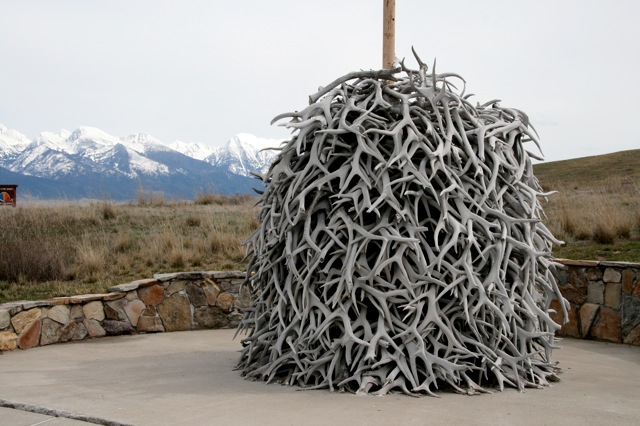
National Bison Range Wildlife Refuge and Missoula, MT


click images to enlarge

2010
digital print
640 x 426 pixels


5/19/2010

Franks


She could be grumpy, Mrs. Franks.
Her hair was a gray helmut that she wore
inside, but I don't forget the sparkle
in her eye. The year they filled

Her lab with colored globes.
Those artifacts of the first person.

Something must have happened
to the computer-makers.
Some giddy delight in their own
clairvoyance. That made them want

To turn every typing tank into a toy
store. We can do this, they said, know-how
spilling over. We'll make these machines
from inflatable air chairs. We'll put our lips

To the power cord and exhale. They're gonna
blow up. Franks will go nuts. We'll have every
gray hair standing when she reclines
on this furniture. We've been to the future

And we're bringing back lava lamps.

Maybe it was the transparency
that did it for her. Was that it?

She could see right to the guts
of those cheerful medicine balls.

Mario claimed he could teach us typing
but she had ideas about why he couldn't.
The boats were better, she said.
She made us row for our words.

Oh, Mrs. Franks. Some days she was tired.
Some days all she could do was list
everything we didn't know
on the whiteboard. Some days we were rats

And she was a lone scientist.
She was a mechanic.

She taught us about engines, she led the
search. What did we know about spelunking?
Rowing was one thing, but…

I want to tell her,
thanks. I met Google through her.
After class - an accidental facial
expression, a look of interest -

I stumbled into a private lesson.
There are many, she said, But this
is the one I like.
A plain page. A baby
name. Another psychic nerd

Playing a joke on the world. Goo
googaga
from the mouth of a grown
woman. Eyes really lit this time, drool
clinging to the strap of her helmut.

Thank you, thank you, Mrs. Franks. It was
an important thing for me to know
it turns out.


5/17/2010

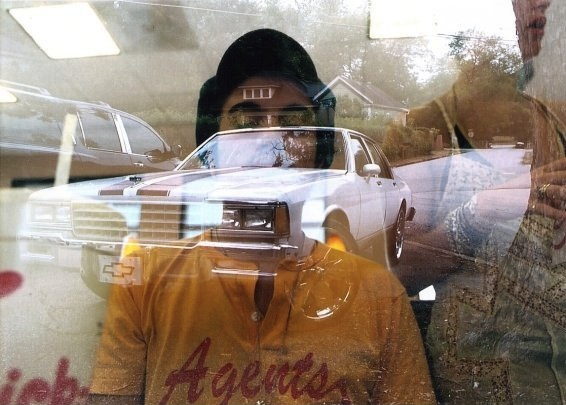
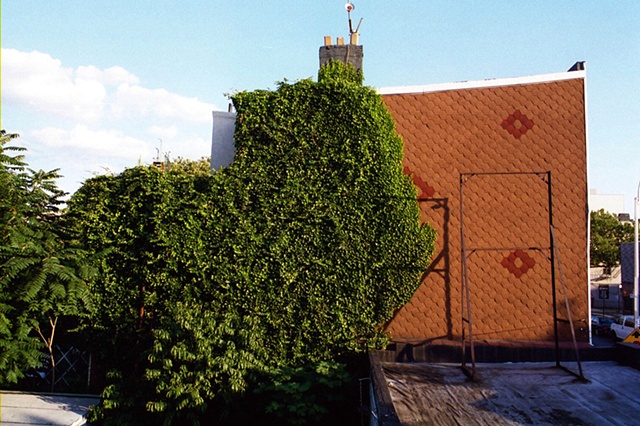
Untitled 17


click to enlarge

2009
chromogenic print
16 x 20 inches